


Why Used HOWO Concrete Mixers Rule Africa & SE Asia
Getting a construction project finished on time is tough enough without constantly worrying about your equipment breaking down. You know how it goes. You are operating in regions where paved roads are a luxury and the weather can turn a dirt path into a swamp in minutes. Demand for used construction machinery Africa and Southeast Asia rely on is booming. But a massive challenge comes with this rapid growth. What do you do when a truck dies in the middle of a job site and there is no high-tech repair facility for hundreds of miles? You need machinery that just works, day in and day out. This exact scenario is why the used HOWO concrete mixer dominates these markets. It solves the biggest headaches for fleet managers, offering brutal toughness and a repair process that anyone can handle locally.
Reason 1: Does It Offer Unmatched Durability for Tough Terrains?
When looking at heavy machinery for demanding environments, the structural integrity of the vehicle is the very first thing you have to check. You need a truck that will not snap or twist under the immense, shifting weight of wet concrete while navigating deep mud out in the bush.
Heavy-Duty Chassis and Power
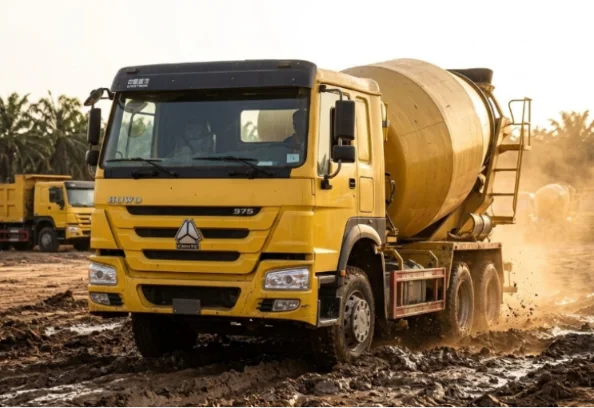
If you look at something like the HOWO 8×4 mixer truck equipped with a 371hp engine, the specifications tell a story of pure ruggedness. Concrete is incredibly heavy. As it sloshes around in the mixing drum, it creates a constantly shifting center of gravity. A weak frame will bend over time. The robust frame of these trucks is built specifically to carry massive loads over unpaved, uneven, or steep mountain roads without flinching. A reliable concrete transit mixer needs raw, unfiltered power to avoid getting stuck on steep inclines. A well-refurbished vehicle retains this legendary mechanical toughness. Sometimes drivers hit potholes the size of small craters. It happens a lot on busy remote sites. This chassis simply takes the abuse and keeps on rolling.
Reason 2: Is Universal Spare Parts Availability Real?
The absolute worst nightmare for any project manager is downtime. A truck sitting idle on a Tuesday morning because a single part broke costs serious money every single hour the crew stands around doing nothing.
Zero Downtime Anxiety
Because of the staggering market share this brand holds, Sinotruk spare parts availability is basically a non-issue. You can walk into almost any local auto parts market in Nairobi, Manila, or Jakarta and find exactly what you need. From basic oil filters to heavy engine blocks, the market is absolutely flooded with parts. Think about the alternative for a second. With other modern imported trucks, you might find yourself waiting four weeks for a tiny proprietary sensor to clear customs. That is totally unworkable. Many components are also interchangeable across different models. You just send someone to town, grab the part, swap it out, and the Sinotruk HOWO mixer goes right back to pouring concrete on the job site.
Reason 3: Why Are Simple Mechanics Without Advanced Technicians Important?
Modern trucks from other regions often come packed with complicated electronic control units and dozens of sensors. While those computers look great on a shiny brochure, they turn into a massive headache when you are operating far away from a certified, air-conditioned dealership.
Mechanic-Friendly Design
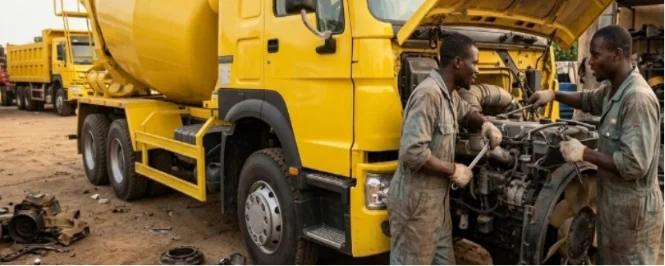
HOWO truck maintenance remains straightforward and highly mechanical. You do not need a guy showing up with a laptop and a certified degree to diagnose why the engine will not turn over. Any basic local mechanic with standard wrenches, a bit of experience, and a good ear for engine sounds can pop the hood and fix the issue. This completely removes the fear of lacking advanced technicians locally. You bypass the complex computer diagnostics that frequently fail in dusty, high-vibration environments anyway. It brings a lot of peace of mind knowing the guy at the corner repair shop, or just the regular site mechanic, can keep the whole fleet moving without calling an expensive specialist.
Reason 4: Does It Have Proven Reliability and Community Trust?
Buying heavy equipment is always a big financial risk. You want to make certain that other people have already tested the machinery in the exact same harsh conditions you deal with every single day.
Tested by Local Climates
These vehicles have already survived the blistering heat of the African sun and the deep, muddy monsoon seasons in Southeast Asia. Because nearly every contractor uses them, fleet managers and drivers constantly share maintenance tips and operation tricks. It naturally creates a built-in support community. When a driver gets stuck, another passing driver knows exactly how to pull them out. Mechanics share shortcuts on fixing specific valves, and owners compare fuel consumption rates over a beer. It is the safe choice because it is the proven choice. You are not an experimental test subject for a new design; you are stepping into a massive ecosystem that already works perfectly.
Reason 5: What About High ROI and Resale Value?
At the end of the day, a construction project is a business venture. The equipment you put your money into needs to pay for itself as fast as possible, and ideally, it should hold enough value to sell later when the job wraps up.
Cost-Effectiveness and Value Retention
Purchasing a used vehicle costs a fraction of the price of a brand-new import, but it performs the exact same heavy lifting. Because the demand never really drops and maintenance is so cheap, these trucks hold their resale value exceptionally well in local markets.
When you decide to buy, working with a true expert matters a lot. This is where a company like Tuoda steps in. They are a seasoned professional supplier of used heavy machinery, deeply familiar with what overseas contractors actually need to succeed. Instead of just washing a truck and shipping it, Tuoda thoroughly refurbishes the machinery. They check the engine, the transmission, and the mixer drum to make sure everything functions smoothly. Getting your equipment from a trusted source means you receive a truck that is ready to work the moment it clears the port. Combining lower upfront costs with an honest, reliable supplier means your return on investment happens much faster.
FAQ
Q1: Can any local mechanic fix a HOWO mixer?
A: Yes. The straightforward mechanical design means basic tools and standard mechanical knowledge are generally enough to complete most common repairs without needing a computer diagnostic tool.
Q2: Are spare parts really that easy to find in Africa?
A: Absolutely. Due to the massive volume of these trucks on the road, local parts markets stock almost everything needed. You rarely have to wait for overseas shipping.
Q3: How does a used HOWO handle muddy and unpaved construction sites?
A: The heavy-duty chassis and strong engine give the truck the raw power and structural strength to push through tough terrains easily, even when fully loaded with heavy wet concrete.
Q4: Will I save money buying used instead of new?
A: Buying used cuts down the initial purchase price drastically. Combined with cheap local replacement parts and easy maintenance, the overall operating cost is kept extremely low.
Q5: Do these trucks hold their resale value after a project is done?
A: Yes. Because the brand is widely popular and well-supported locally, there is almost always a buyer looking for a second-hand mixer in decent working condition.
