


Used Dump Truck Maintenance Priorities After Export: What Actually Prevents Downtime
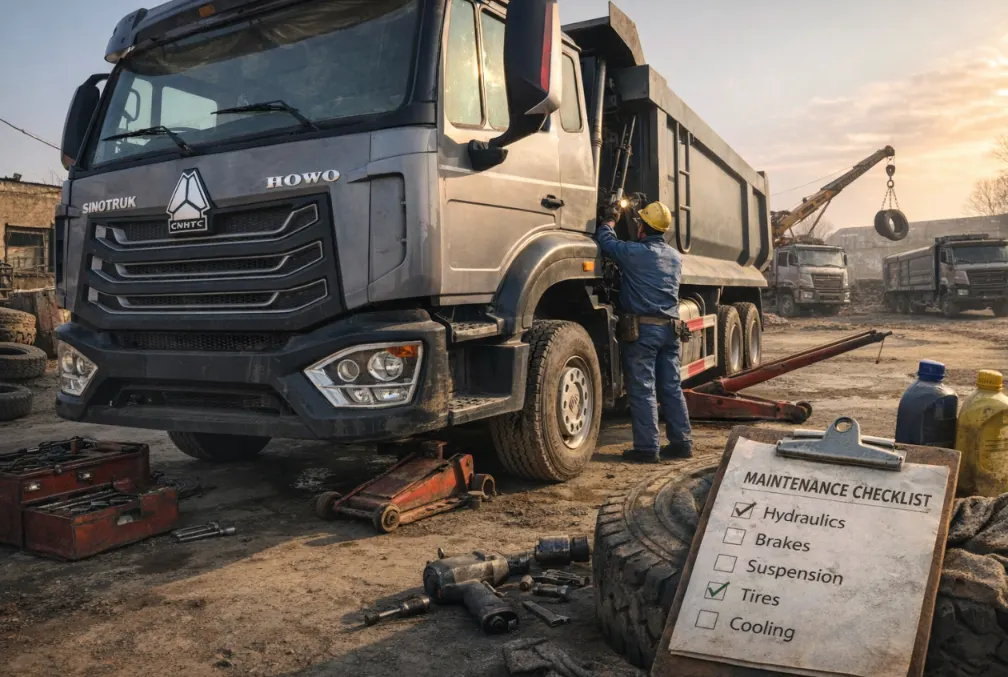
After export, the cost that hurts most is rarely a single repair bill. It is idle time, missed haul cycles, and the slow chain reaction that follows when one truck goes down and the rest of the plan has to flex around it. Many truck breakdowns in export markets are not sudden failures. They are predictable outcomes of maintenance priorities that did not match real working conditions.
If you are running dump truck maintenance after export as part of a project fleet, the goal is not to “do everything.” The goal is to focus on the few systems that fail first under harsh cycles and create the longest downtime. This guide lays out used dump truck maintenance priorities that directly help you prevent dump truck downtime, especially when parts lead times and site constraints make recovery slow.
Start with Load Cycles, Not the Maintenance Manual
A maintenance manual assumes a stable environment: consistent fuel quality, predictable loads, decent roads, and routine service access. Export reality often looks different. Load cycles are shorter, payload pressure is higher, road surfaces are rougher, and drivers may prioritize output over mechanical sympathy. If maintenance is planned around generic intervals instead of real cycles, problems show up early and repeat.
For a dump truck fleet, the fastest way to reduce downtime is to align inspection frequency to what the trucks actually do:
-
High-frequency short hauls create heat, brake wear, and hydraulic cycling stress.
-
Rough roads accelerate suspension and mounting-point fatigue.
-
Overload habits multiply frame stress and tire failure risk.
When you treat operating conditions as the starting point, maintenance becomes a control system for uptime, not a checklist for compliance.
Hydraulic System Maintenance That Actually Prevents Downtime
If you need one priority that consistently reduces downtime after export, it is hydraulics. Dump truck hydraulic issues often begin as small signals—then become a hard stop when lift speed drops, a cylinder drifts, or a leak turns into pressure loss at the worst moment.
Focus on maintenance actions that catch the early signals of hydraulic failure:
-
Track lift speed changes. A slow lift is rarely “just normal aging.”
-
Inspect visible leak points after work shifts, not only during scheduled service.
-
Watch oil temperature behavior during repeated cycles; heat is a leading indicator.
-
Pay attention to pump noise changes and uneven lift movement.
Hydraulic maintenance is not only about fixing leaks. It is about keeping the lift system stable under repeated cycles so the truck stays productive. If your operation depends on fast turnarounds, hydraulic reliability is one of the most direct ways to prevent dump truck downtime.
Frame, Suspension, and Mounting Points: The Wear You Can’t Ignore
Downtime is often blamed on engines or transmissions, but structural wear quietly controls how long a truck can keep taking punishment. Frame stress and suspension fatigue accumulate through heavy loads, uneven terrain, and repeated impacts. Once cracks start, they spread faster than most operators expect.
Prioritize checks that spot fatigue early:
-
Frame rails and crossmembers near known stress points
-
Suspension mounts and spring seats
-
Signs of prior weld repair or reinforcement plates
-
Misalignment patterns (uneven stance, unusual tire wear, body mount shift)
Structural checks do not have to be complicated, but they do have to be consistent. A short, regular inspection rhythm on structural hotspots is often cheaper than a single unplanned shutdown that requires welding, reinforcement, and weeks of recovery time.
Brake and Tire Maintenance Under Export Conditions
Brake and tire issues are downtime multipliers. A brake problem rarely stays isolated: it accelerates tire wear, heats components, increases stopping distance, and forces operational restrictions. Tire failure then triggers more downtime, more cost, and sometimes secondary damage.
In export conditions, pay attention to:
-
Uneven tire wear patterns (often a suspension or alignment signal)
-
Brake overheating behavior on routes with frequent stops or steep grades
-
Pulling, vibration, or delayed response that operators may normalize
-
Air and brake line integrity in dusty or humid environments
A practical approach is to treat brakes and tires as a combined uptime system. When either side drifts, the probability of an unplanned stop rises quickly.
Cooling, Filtration, and Fluids: Small Items, Big Consequences
Many breakdowns that look like “engine problems” start as cooling or filtration problems. Dust, low-grade fuel, and inconsistent service practices make filters and fluid health more important after export than many buyers expect. When cooling and filtration degrade, operating temperatures rise, performance becomes inconsistent, and failures cascade.
This is where disciplined dump truck service pays off:
-
Cooling system checks that prevent overheating and seal failures
-
Fuel and air filtration that protects combustion stability
-
Fluid condition checks that reduce wear and contamination problems
-
A habit of replacing the small components before they become big failures
When service becomes reactive—waiting for visible symptoms—downtime becomes routine. When service stays proactive on cooling and filtration, the system stays predictable.
Operator Habits That Shorten or Extend Dump Truck Life
You can run the same truck into the ground in months—or keep it productive for years—depending on operating habits. After export, operator behavior often becomes the hidden variable that drives maintenance frequency and failure rate.
Downtime-resistant habits include:
-
Avoiding high-impact loading that shocks mounts and suspension
-
Keeping load behavior consistent instead of oscillating between underload and overload
-
Letting hydraulic cycles complete cleanly instead of forcing partial lifts repeatedly
-
Reporting “small changes” (new vibration, slower lift, brake feel shift) early
Operator habits do not replace maintenance. They determine whether maintenance has time to work. If your team waits until a failure is obvious, you lose the chance to intervene cheaply.
A Practical Maintenance Priority Order for Exported Used Dump Trucks
A good plan is not a long plan. It is a prioritized plan. If resources are limited, concentrate on the systems that most often cause long downtime and slow recovery.
A practical priority order looks like this:
-
Hydraulics (leaks, lift speed, temperature behavior, cycle stability)
-
Structural hotspots (frame, mounts, suspension fatigue signals)
-
Brakes and tires (wear patterns, overheating, response stability)
-
Cooling and filtration (temperature control, fuel/air protection, fluid health)
-
Operator feedback loop (early reporting, consistent use patterns)
A realistic dump truck maintenance schedule after export should reflect your load cycles and site reality—not generic intervals. If the cycle is harsh, shorten inspection spacing on hydraulics and structural points first. That is where uptime is won.
Conclusion: Maintenance After Export Is About Priority, Not Perfection
Post-export maintenance works when it targets the systems that fail first under your operating conditions. The goal is not perfection. The goal is repeatable uptime. If your plan focuses on hydraulics, structural hotspots, brakes and tires, and the cooling/filtration layer, you reduce the failures that create the longest recovery time.
Most truck breakdowns do not arrive without warning. They arrive after signals were missed or postponed. When used dump truck maintenance is built around real cycles and clear priorities, you can prevent dump truck downtime in a way that protects schedule, cost, and site rhythm.
A Practical Export Partner for Used Dump Trucks
Liangshan Tuoda International Trade Co., Ltd. (“Tuoda”) focuses on exporting used dump trucks, tractor trucks, and other heavy-duty commercial vehicles to overseas markets. Based in Liangshan—one of China’s most established hubs for truck circulation and refurbishment—Tuoda operates close to inventory and evaluates trucks with export use in mind. The work goes beyond availability: mechanical condition, structural integrity, documentation readiness, and shipping feasibility are treated as part of one delivery process. For buyers who choose refurbished units, Tuoda applies targeted reconditioning based on real downtime risks rather than cosmetic upgrades, helping reduce surprises after arrival. From model selection and inspection coordination to export paperwork and logistics planning, Tuoda supports contractors, fleet operators, and dealers who need reliable supply and controlled operating outcomes.
FAQ
Q1: What causes the most downtime in used dump trucks after export?
A: The most common downtime drivers are dump truck hydraulic failures, structural fatigue around mounts and suspension points, and brake/tire problems that escalate quickly under harsh cycles.
Q2: How does dump truck maintenance after export differ from local fleet maintenance?
A: After export, parts lead times, road quality, fuel and dust conditions, and service access change the failure pattern. Maintenance priorities need to match real load cycles, not generic intervals.
Q3: What should a dump truck maintenance schedule focus on first?
A: Start with hydraulics and structural hotspots, then brakes/tires and cooling/filtration. These areas most directly help prevent dump truck downtime under export conditions.
Q4: Why do truck breakdowns happen even when trucks receive regular service?
A: Regular service can miss high-impact failure points if it follows a fixed routine. Breakdowns often happen when hydraulic wear, frame stress, or filtration issues are not monitored based on operating intensity.
Q5: What operator habits most improve uptime for a dump truck fleet?
A: Consistent loading discipline, avoiding repeated overload, completing hydraulic cycles cleanly, and reporting small performance changes early all reduce unplanned shutdowns.
